+of+DSCN0521.JPG)

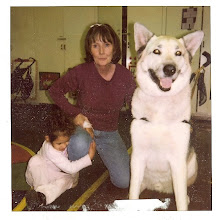
Koreatown
We live in Koreatown. Our part of Wilshire Blvd. has lots of lovely old buildings that have been abandoned and deteriorating since Century City became the fashionable place to do whatever people used to do in the Wilshire District. I used to walk around the area to buy groceries, get my hair cut, have my nails done and other mundane stuff. Anyway, I used to walk by these lovely old neighborhoods and be sorry about the buildings.. The Koreans have saved the area. It's a major club and social scene for the Southern California Korean young population. They come here from all over to party in these wonderful old buildings.
Anyway, one summer evening some summers ago, Manuel, Joanna, and I were walking around the neighborhood looking for a place to eat. We passed this new Korean grill in a storefront and went in. The signs on the walls were in Korean; the menu was in Korean; the people spoke Korean, and the place was clean, brand new, and empty. The waitresses were lovely. They brought us meat to grill, showed us how to grill it, and brought all of the wonderful little dishes that keep Korean wives in the kitchen through dinner. The food was spectacular; the people absolutely gently and lovely; the bill very high. We walked home and did not go back for about three years.
Last summer, we walked over again. There was a line around the block for this little storefront in an area full of fancy Korean restaurants with valet parking. All the people in line were Koreans but us. We got in line. A man who spoke English came out and took us to a seat; I don't know why we got to go past the line. Maybe three of us was the right number. Anyway, the plate glass windows were propped open to the street, and the place full of cigarette and grill smoke. All the men in the place were smoking away. The signs and the menu were still in Korean, and the staff still did not speak English, but the place was crammed full with a huge line out front. They did not figure out what we should eat or teach how to eat it. We sat in a booth, totally bewildered. What to do?
Manuel finally asked a waitress if she spoke English. She looked at him with total lack of comprehension for about a minute. Then she said in Spanish, No hablo ingles, pero hablo espanol muy bien, so we discussed our order and ordered it in Spanish. I am sure there is no other city on earth where that could happen.
Thursday, April 24, 2008


middle class anomie and prozac
Religion often seems to alleviate people's serious pain; plus it has the really wonderful side effect of making people feel superior to everyone else, including those who find relief in other religions. Some people I know have resorted to alcohol to their own blurred satisfaction. I tried it; it didn't work for me. It does,however, have the wonderful side effect that it is a form of suicide at exactly the same time that it makes you not so anxious to die. The therapists I've talked to have mistaken a genetic tendency to night terrors for anger or fear, both of which I still had in abundance when the therapist wandered off into the sunset. One woman interrupted my meditation on the horrors of my mother's mental illness to ask me whether I thought I might have forgotten that my father raped me. I still had the night terrors, too.
Psychiatrists tend to make me wonder how hard it can be to get through medical school, but they do have the pads, the pens, and the right to give you pretty much exactly the same drugs the last psychiatrist gave you with pretty good effect. Of course, despite their passion for diagnosis, none of them has much interest in, or knowledge of, what your actual condition might be. I had one who asked me after my severe depressive breakdown how my family was. I kept telling him fine. Of course, he had to know they were nothing of the sort, but he did not feel the need to mention that fact to me. He did and would, if I had a psychiatrist who was not more deeply involved in his fantasy life than I am in mine, have access to the drugs that make my life livable and was very willing to give them to me as long as I did not take too much of his time. Drugs are only as dumb as they are, and the human capacity for stupidity and arrogance seems to be infinite. Like everyone who suffers from the horrors of serious depression, I wish someone had some interest in who I am, but at least whatever self absorbed middle class sad people there are out there buying Prozac make it profitable for the drug companies to figure out how to relieve my agony. By the way, I find it difficult to believe that anyone who wasn't in pretty serious pain would tolerate the nausea, diarrhea, vomiting at meals, dizziness, difficulty swallowing , and obesity involved in starting the medications I take, and have taken, to be able to function. One more thing. Just now, one can admit to depression without social stigma because it is stylish. Bipolar disorder seems to be having its day, too. I very much doubt people will ever stand around at parties talking about the agonies of their schizophrenia. Hence, next to no research on how to effectively treat it. Thank god I don't have Alzheimer's yet.
Psychiatrists tend to make me wonder how hard it can be to get through medical school, but they do have the pads, the pens, and the right to give you pretty much exactly the same drugs the last psychiatrist gave you with pretty good effect. Of course, despite their passion for diagnosis, none of them has much interest in, or knowledge of, what your actual condition might be. I had one who asked me after my severe depressive breakdown how my family was. I kept telling him fine. Of course, he had to know they were nothing of the sort, but he did not feel the need to mention that fact to me. He did and would, if I had a psychiatrist who was not more deeply involved in his fantasy life than I am in mine, have access to the drugs that make my life livable and was very willing to give them to me as long as I did not take too much of his time. Drugs are only as dumb as they are, and the human capacity for stupidity and arrogance seems to be infinite. Like everyone who suffers from the horrors of serious depression, I wish someone had some interest in who I am, but at least whatever self absorbed middle class sad people there are out there buying Prozac make it profitable for the drug companies to figure out how to relieve my agony. By the way, I find it difficult to believe that anyone who wasn't in pretty serious pain would tolerate the nausea, diarrhea, vomiting at meals, dizziness, difficulty swallowing , and obesity involved in starting the medications I take, and have taken, to be able to function. One more thing. Just now, one can admit to depression without social stigma because it is stylish. Bipolar disorder seems to be having its day, too. I very much doubt people will ever stand around at parties talking about the agonies of their schizophrenia. Hence, next to no research on how to effectively treat it. Thank god I don't have Alzheimer's yet.
Tuesday, April 15, 2008
Sea Rock and the Maiden
slick, shiny lips parted red
eyes wide
what do you want?
what do you want?
what do you say I want?
sea swell bashes the rock
spray shoots
the crag stands solid
eternal
in the salty perfect solvent
sand on the beach
sea swells
beating
beating
what do you want from the rock?
eating your sandwich on the sand
the rock says nothing-granite white flecked- solitary
seared at the magma core
do you love me?
Love me?
Love me?
Love me.
eyes wide
what do you want?
what do you want?
what do you say I want?
sea swell bashes the rock
spray shoots
the crag stands solid
eternal
in the salty perfect solvent
sand on the beach
sea swells
beating
beating
what do you want from the rock?
eating your sandwich on the sand
the rock says nothing-granite white flecked- solitary
seared at the magma core
do you love me?
Love me?
Love me?
Love me.
Sunday, April 13, 2008
Selena and Mamie
Selena guessed she was glad Mamie could help. She had to be if she and Red wanted to buy that little house outside the city. So Selena left her girls every morning to work at the Welfare office down Pico on the number 16. She walked the blocks to the bus stop in her suit and heels and clear red lipstick early, leaving Mollie, and the baby asleep in the in the big warm house on twelfth street. Mamie, herself, was the problem in Selena's eyes. Red was her only child now. Theresa had died of pneumonia at three, and Clarence had killed Joe because he had been drinking again. Of course, Clarence had hardly been sober himself when he enforced Doctor's orders with his fist to his son's delicate chest.
Clarence was buried next to Joe in old Holy Cross. Red had never been favorite, but he was all she had, and Mamie would be damned if she'd just hand her first grandchild over to that Mormon tart. So Selena ran to the bus every morning after she poured Red's coffee, and Mamie watched the little girls, teaching Mollie to dance with her big, dramatic scarves while she practised piano every morning for one hour- not one minute less- but they could go on playing if they wanted to, Mollie and Mamie. Mamie played Parade of the Tin Soldiers and A Bicycle Built for Two, Old Black Joe, Daisy, Daisy.. At Christmas, she played Santa Claus is Coming to Town from the sheet music with the pictures of dolls, drums, and tin soldiers on the cover. During practice, Mamie played endless scales, simple Do, Re, Mi first to warm up her hands, then incredibly complex runs from the sheet music with the brown cover.
Mamie took Mollie by the hand to the parlor, sat the little girl next to her on the piano bench, and opened the cover of the upright. Red had bought it for her with the first $40 he had left after the rent and groceries. Selena kept her fury to herself for the time being. Mollie showed her grandmother the little brass plate that marked middle Do. Mamie helped Mollie spread her small fingers to play Do, re, mi, fa, so. One finger for each note, precise, clear. Mamie showed Mollie how to hold her hands straight from the wrists, fingers bent at the knuckles, back straight. Then the woman would give the girl one of the scarves from before the Depression. They really did have lace curtains then, new cars, and white suits for the men.
Red drove the huge gray car with the running board to his job in production assurance at Sargeant's Engineering in Huntington Park where he inspected airplane parts. Red loved planes. He would tip his head back to look up at an airliner passing overhead and say what kind of plane it was and who made it when. He loved to go to the airport and watch the planes take off. He'd never taken one anywhere, including the War. He'd stayed in L A making sure the planes that went to Europe did not fall out of the sky. So he drove to the little industrial town every morning in his car after breakfast while Selena ran to the bus. Selena was very disciplined and knew how to survive which is more than anyone would say about Mamie. Of course they hated each other and fought over Red.
Selena always got up very early to make Red's oatmeal separate from whatever Mamie and the girls ate later. She made and poured his coffee and put in the cream and sugar just right. She squeezed his orange juice herself. Red was no savage; he wanted things done just so, and he had shown Selena how right away. While Red sat at Mamie's rosewood table, Selena put on her stylish skirt suit, rolled the front of her hair, put on her lipstick, gulped her own coffee and headed for the bus. She was already pregnant. They hoped for a boy this time. She would not see her children again until after dark. Then she had to see that Red had everything he needed before she could focus on straightening out her girls. Barbara cooked for Mamie, Mollie, and Jo. Only Selena ever cooked for Red, and only Selena ever ate with him. He was no savage who ate with children; also the kids had to eat what was good for them, liver and onions. Red ate what he wanted, prepared correctly.
Thank God for Barbara. Selena did not like having a maid, but Mamie was used to one, and Red gave her whatever she wanted. Mamie was spoiling the girls, though. The only person in that house who was not spoiled was Selena herself. She loved Red, but she wished she could raise her own girls. They needed to learn to keep house, cook, run the wringer washer, and heat the iron on the stove. This business with roller skates and Christmas trees was so much Irish indulgence. Red said she could quit working as soon as they had the little house. It was bitter, though, to lose her home to that spoiled, eccentric old hag. There were no concert pianists in Selena's family, and they had all worked hard all their lives. They worked as maids; they did not have them.
Clarence was buried next to Joe in old Holy Cross. Red had never been favorite, but he was all she had, and Mamie would be damned if she'd just hand her first grandchild over to that Mormon tart. So Selena ran to the bus every morning after she poured Red's coffee, and Mamie watched the little girls, teaching Mollie to dance with her big, dramatic scarves while she practised piano every morning for one hour- not one minute less- but they could go on playing if they wanted to, Mollie and Mamie. Mamie played Parade of the Tin Soldiers and A Bicycle Built for Two, Old Black Joe, Daisy, Daisy.. At Christmas, she played Santa Claus is Coming to Town from the sheet music with the pictures of dolls, drums, and tin soldiers on the cover. During practice, Mamie played endless scales, simple Do, Re, Mi first to warm up her hands, then incredibly complex runs from the sheet music with the brown cover.
Mamie took Mollie by the hand to the parlor, sat the little girl next to her on the piano bench, and opened the cover of the upright. Red had bought it for her with the first $40 he had left after the rent and groceries. Selena kept her fury to herself for the time being. Mollie showed her grandmother the little brass plate that marked middle Do. Mamie helped Mollie spread her small fingers to play Do, re, mi, fa, so. One finger for each note, precise, clear. Mamie showed Mollie how to hold her hands straight from the wrists, fingers bent at the knuckles, back straight. Then the woman would give the girl one of the scarves from before the Depression. They really did have lace curtains then, new cars, and white suits for the men.
Red drove the huge gray car with the running board to his job in production assurance at Sargeant's Engineering in Huntington Park where he inspected airplane parts. Red loved planes. He would tip his head back to look up at an airliner passing overhead and say what kind of plane it was and who made it when. He loved to go to the airport and watch the planes take off. He'd never taken one anywhere, including the War. He'd stayed in L A making sure the planes that went to Europe did not fall out of the sky. So he drove to the little industrial town every morning in his car after breakfast while Selena ran to the bus. Selena was very disciplined and knew how to survive which is more than anyone would say about Mamie. Of course they hated each other and fought over Red.
Selena always got up very early to make Red's oatmeal separate from whatever Mamie and the girls ate later. She made and poured his coffee and put in the cream and sugar just right. She squeezed his orange juice herself. Red was no savage; he wanted things done just so, and he had shown Selena how right away. While Red sat at Mamie's rosewood table, Selena put on her stylish skirt suit, rolled the front of her hair, put on her lipstick, gulped her own coffee and headed for the bus. She was already pregnant. They hoped for a boy this time. She would not see her children again until after dark. Then she had to see that Red had everything he needed before she could focus on straightening out her girls. Barbara cooked for Mamie, Mollie, and Jo. Only Selena ever cooked for Red, and only Selena ever ate with him. He was no savage who ate with children; also the kids had to eat what was good for them, liver and onions. Red ate what he wanted, prepared correctly.
Thank God for Barbara. Selena did not like having a maid, but Mamie was used to one, and Red gave her whatever she wanted. Mamie was spoiling the girls, though. The only person in that house who was not spoiled was Selena herself. She loved Red, but she wished she could raise her own girls. They needed to learn to keep house, cook, run the wringer washer, and heat the iron on the stove. This business with roller skates and Christmas trees was so much Irish indulgence. Red said she could quit working as soon as they had the little house. It was bitter, though, to lose her home to that spoiled, eccentric old hag. There were no concert pianists in Selena's family, and they had all worked hard all their lives. They worked as maids; they did not have them.
Friday, April 11, 2008
Hell
Bertrand Russell wrote, "The infliction of cruelty with a good conscience is a delight to moralists — that is why they invented hell.." ( qoted in Pinker, New York Times online, January 12, 2008
Probability and common sense
People have their own favorite measures of probability in the multiverse, said Raphael Bousso of the University of California, Berkeley. "So Boltzmann brains are just one example of how measures can predict nonsense; anytime your measure predicts that something we see has extremely small probability, you can throw it out," he wrote in an e-mail message (quoted in Overbye, Dennis, NY Times,1/15/08)
Watts
The summer after I graduated from St Michael's Girls' High School in 1965, I worked as playground director at La Tijera elementary school in Inglewood, which. was then a middle class white neighborhood. I took the bus down Manchester to La Tijera Blvd, crossed the La Cienega Freeway, and walked half a block to the school. My boyfriend sometimes picked me up after work in one of his father's hearses. Brian was being made to work that summer driving huge bunches of flowers around. There was never a body back there, and I thought it was cool to ride home in a hearse listening to War, What Is It Good For?
When Brian wasn't waiting for me in the parking lot, I took the bus back down Manchester and walked the two blocks to my brother's house. One day, Brian showed up with his blue Chevy instead of the hearse. He had painted the Chevy the color of my eyes instead of taking me out. I was not pleased with the romance of this gesture, but he hadn't asked me. He told me to get into the car, white faced. I got in, and he told me to get down on the floor. There was a riot. I was not especially surprised about the riot. I walked every day to church, from work and school and to the little store in streets full of people standing outside to get out of overcrowded, stifling apartments. Over the years, I had watched these cheap buildings slowly replace the little houses in the neighborhood. The huge, green lots had been crammed with tacky apartment buildings, and there was next to no open land. The Chinese people who ran the little store around the corner ground meat fresh for me and not for my neighbors. I sometimes got offered $20 for my body even though I looked about as Catholic school girl as you could get.
People had been idling in front of the buildings in small crowds all summer trying to breathe. I told Brian I lived there, sometimes I forgot I wasn't black, and I was not going to get on the floor of his stupid blue Chevy. He was used to having a lunatic for a girl friend and didn't argue. Brian's car had some kind of control on the accelerator that kept him from going more than 35 miles an hour. He believed that if he got stopped, and I had bare feet, he would go to jail for statutory rape. I was 18 at the time, and so was he, but I wore shoes in his car, if nowhere else. Bryan was a carefully brought up Irish Catholic boy. My dad knew his dad. His sister, Maureen, introduced me to Pat O Brien, the actor. Pat O Brien was surprisingly tall, and he ignored me. Brian wanted to marry me, my dad wanted me to marry him, and his dad wanted me to marry him. I had no intention of marrying anybody. Also, I could not face the idea of being Mrs. Mc Glynn's daughter in law. She got mad if he missed dinner because he was swinging me on the swing set in my backyard. Maureen got mad because he bought me presents and not her. He thought I should hide on his car floor. These were not my kind of people.
The ride down Manchester was about the same that day as it was every day until we hit Broadway. At Broadway, the street narrowed to one lane going each way; there were people from t he buildings to the middle of the street. Brian was forced to drive at more of a snail's pace then he usually did; people were pounding on the windshield and the hood of the blue car. There was a lot of yelling. I have to admit Bryan had enormous courage. He was terrified of my neighborhood at the best of times; now he really did have something to fear, but he had come and gotten me and taken me home through what he knew were very dangerous streets. When we got to my brother's house, I got out of the car, and a group of teen aged girls walking by yelled something terrible at me. I was hurt as I walked up the stairs to the house. I went in and sat down in front of the TV and watched the Main Street stores burn on TV. I stood on the porch and watched the exact same flames rise above Main Street half a block away. The black neighbors were standing on the porch, terrified, watching the same flames. We talked about what was going on and how scary it all was.
My brother, Dick, was in the garage making Molotov cocktails. It's a miracle we did not all blow to Hell. The riot, as I remember, lasted three days during which we watched it on the porch until we were forbidden to stand outside our houses on threat of being shot by the police, who drove up and down the street, yelling through bull horns. Later, there was a curfew that meant we had to be indoors by dark. The National Guard drove down the street on tanks, bayonets at the ready. We varied the experience by watching it on TV. Flames shot into the air. Someone ran through the back yard. Like everyone in the area, we ran out of milk, bread, and the meat we bought from the Chinese store. When it was quiet, we went out to see and try to get food. The Chinese store had a sign on what was left of its display window that said it was Black Owned. It had been destroyed. The meat case was shattered all over the floor. The refrigerator and its contents were all over the floor. We looted some cans and went home. There was nobody to pay. We watched people carrying TVs, stereos, and god knows what else from wrecked department stores on TV. We watched them get arrested. We listened to commentators note what savages we were that we did not respect private property.
I didn't feel like going to work, and I figured the riot was a good excuse, so I didn't go back for three more days after the riot was over. Brian called every day to ask if I was going to work so he could take me. I told him I didn't know, and I didn't until I got up after three days and felt like going. I got on the Manchester bus as usual. As usual, I was the only White on the bus. The people looked at me, and I looked at them the way you look at your brothers and sisters after your parents have had a truly horrifying fight, like we didn't know what to do. I got to work, and the people I worked with treated me like I was made of glass. I took as much advantage of my delicate situation of riot survivor as I could. I had not called, and I very well could have, but we were having a riot, and I knew Inglewood people. That evening, Bryan picked me up without knowing whether I'd be there or not. I guess he had been coming every day because I was being a loony bitch about it, and he genuinely loved me. In September, I moved to Marymount in Palos Verdes, but I went home for weekends sometimes and the Holidays as long as I could stand my family. Then I stopped going home.
I had lived in the same house since I was five years old. I walked the streets to school for twelve years as the area changed from working class white and Mexican American to almost entirely black. When I was young, I used to walk to the little store around the corner to buy cigarettes,100 malted milk balls , and movie magazines for the babysitter. Cigarettes were a quarter a pack, malted milk balls were two for a penny, I had heard that popsicles were two cents, and I was about 8 years old. I didn't dare touch the candy, but the magazine was printed matter, so I walked home reading it. Usually I got into trouble for that because the reading slowed me down, and the sitter waiting for her stuff. Anyway, the guy who owned the little store was Chinese; he sold meat, and he had a huge freezer with a big stainless steel door that closed with a metal handle. He used to open that door and threaten to put us kids in it. He actually did put one of my brothers in once. When he finally let my brother out, whichever boy it was strode out cocky; he had survived the freezer.
The sitter sat in the armchair and watched American Bandstand, smoked, and ate her malted milk balls. I watched the kids. This arrangement worked fine for my mother; the sitter was legal, and Mother pretty much expected me to take care of the kids anyway. Mamie had taken care of us until she got sick, and then Dick had to do it. He made it very clear that I was a dead girl if anything happened he didn't like. He wanted to hang out with his friends who all had duck tails and leather jackets. He did not want to take care of his many, many half sisters and brothers. When I was about 6, a social worker came to the house, stood on the porch watching us with my mother. She told my mother that if she did not get adequate child care, the county would put us in foster care. The next day, Mrs. Spruitt appeared, standing on the same back porch, looking at us. Dick became a free sixteen year old juvenile delinquent. Mamie had died sometime in the meantime, vomiting blood in the only ambulance my parents ever called although my mother was carried out of the little house hemorrhaging every year from James on down.
The year Jimmie was born, there were five of us. I was six years old. We were sitting in the tiny living room watching some kids' show on Channel 11 when my father came in from the kitchen and told me to get the kids together in the bedroom, close the door, and keep them there. I gathered my three sisters and two brothers into the adjoining room, put my youngest brother on my lap, and we waited while the noises went on outside the door. I sat on the bed holding the baby on my lap, talking to the other kids to keep them calm while my father carried my bleeding mother out of the house to the car.
Daddy was an old fashioned Irish father. When he got home, his kids fell silent, all of us, if we valued our lives. He had worked hard all day at Sergeant's Engineering, and he needed his repose. My mother had worked hard all day, too, and she was always pregnant. She took the bus to the Records Building downtown every morning, running to the bus stop. My Dad drove the family station wagon. Mother came home and cooked in the narrow galley kitchen while my Dad sat on a stool and read the four daily papers, one at a time. As he finished them, he gave them to us. My mother made sure we took baths. When Daddy said for us to sit in that room, we did until someone opened the door. That night, it was Mrs. Spruitt who had come when Daddy called, cleaned up whatever mess there was and then opened the door. Mother came back in a few days without the new baby who had to stay in the hospital until he weighed four pounds. That was about a month.
The summer after I graduated from St Michael's Girls' High School in 1965, I worked as playground director at La Tijera elementary school in Inglewood, which. was then a middle class white neighborhood. I took the bus down Manchester to La Tijera Blvd, crossed the La Cienega Freeway, and walked half a block to the school. My boyfriend sometimes picked me up after work in one of his father's hearses. Brian was being made to work that summer driving huge bunches of flowers around. There was never a body back there, and I thought it was cool to ride home in a hearse listening to War, What Is It Good For?
When Brian wasn't waiting for me in the parking lot, I took the bus back down Manchester and walked the two blocks to my brother's house. One day, Brian showed up with his blue Chevy instead of the hearse. He had painted the Chevy the color of my eyes instead of taking me out. I was not pleased with the romance of this gesture, but he hadn't asked me. He told me to get into the car, white faced. I got in, and he told me to get down on the floor. There was a riot. I was not especially surprised about the riot. I walked every day to church, from work and school and to the little store in streets full of people standing outside to get out of overcrowded, stifling apartments. Over the years, I had watched these cheap buildings slowly replace the little houses in the neighborhood. The huge, green lots had been crammed with tacky apartment buildings, and there was next to no open land. The Chinese people who ran the little store around the corner ground meat fresh for me and not for my neighbors. I sometimes got offered $20 for my body even though I looked about as Catholic school girl as you could get.
People had been idling in front of the buildings in small crowds all summer trying to breathe. I told Brian I lived there, sometimes I forgot I wasn't black, and I was not going to get on the floor of his stupid blue Chevy. He was used to having a lunatic for a girl friend and didn't argue. Brian's car had some kind of control on the accelerator that kept him from going more than 35 miles an hour. He believed that if he got stopped, and I had bare feet, he would go to jail for statutory rape. I was 18 at the time, and so was he, but I wore shoes in his car, if nowhere else. Bryan was a carefully brought up Irish Catholic boy. My dad knew his dad. His sister, Maureen, introduced me to Pat O Brien, the actor. Pat O Brien was surprisingly tall, and he ignored me. Brian wanted to marry me, my dad wanted me to marry him, and his dad wanted me to marry him. I had no intention of marrying anybody. Also, I could not face the idea of being Mrs. Mc Glynn's daughter in law. She got mad if he missed dinner because he was swinging me on the swing set in my backyard. Maureen got mad because he bought me presents and not her. He thought I should hide on his car floor. These were not my kind of people.
The ride down Manchester was about the same that day as it was every day until we hit Broadway. At Broadway, the street narrowed to one lane going each way; there were people from t he buildings to the middle of the street. Brian was forced to drive at more of a snail's pace then he usually did; people were pounding on the windshield and the hood of the blue car. There was a lot of yelling. I have to admit Bryan had enormous courage. He was terrified of my neighborhood at the best of times; now he really did have something to fear, but he had come and gotten me and taken me home through what he knew were very dangerous streets. When we got to my brother's house, I got out of the car, and a group of teen aged girls walking by yelled something terrible at me. I was hurt as I walked up the stairs to the house. I went in and sat down in front of the TV and watched the Main Street stores burn on TV. I stood on the porch and watched the exact same flames rise above Main Street half a block away. The black neighbors were standing on the porch, terrified, watching the same flames. We talked about what was going on and how scary it all was.
My brother, Dick, was in the garage making Molotov cocktails. It's a miracle we did not all blow to Hell. The riot, as I remember, lasted three days during which we watched it on the porch until we were forbidden to stand outside our houses on threat of being shot by the police, who drove up and down the street, yelling through bull horns. Later, there was a curfew that meant we had to be indoors by dark. The National Guard drove down the street on tanks, bayonets at the ready. We varied the experience by watching it on TV. Flames shot into the air. Someone ran through the back yard. Like everyone in the area, we ran out of milk, bread, and the meat we bought from the Chinese store. When it was quiet, we went out to see and try to get food. The Chinese store had a sign on what was left of its display window that said it was Black Owned. It had been destroyed. The meat case was shattered all over the floor. The refrigerator and its contents were all over the floor. We looted some cans and went home. There was nobody to pay. We watched people carrying TVs, stereos, and god knows what else from wrecked department stores on TV. We watched them get arrested. We listened to commentators note what savages we were that we did not respect private property.
I didn't feel like going to work, and I figured the riot was a good excuse, so I didn't go back for three more days after the riot was over. Brian called every day to ask if I was going to work so he could take me. I told him I didn't know, and I didn't until I got up after three days and felt like going. I got on the Manchester bus as usual. As usual, I was the only White on the bus. The people looked at me, and I looked at them the way you look at your brothers and sisters after your parents have had a truly horrifying fight, like we didn't know what to do. I got to work, and the people I worked with treated me like I was made of glass. I took as much advantage of my delicate situation of riot survivor as I could. I had not called, and I very well could have, but we were having a riot, and I knew Inglewood people. That evening, Bryan picked me up without knowing whether I'd be there or not. I guess he had been coming every day because I was being a loony bitch about it, and he genuinely loved me. In September, I moved to Marymount in Palos Verdes, but I went home for weekends sometimes and the Holidays as long as I could stand my family. Then I stopped going home.
I had lived in the same house since I was five years old. I walked the streets to school for twelve years as the area changed from working class white and Mexican American to almost entirely black. When I was young, I used to walk to the little store around the corner to buy cigarettes,100 malted milk balls , and movie magazines for the babysitter. Cigarettes were a quarter a pack, malted milk balls were two for a penny, I had heard that popsicles were two cents, and I was about 8 years old. I didn't dare touch the candy, but the magazine was printed matter, so I walked home reading it. Usually I got into trouble for that because the reading slowed me down, and the sitter waiting for her stuff. Anyway, the guy who owned the little store was Chinese; he sold meat, and he had a huge freezer with a big stainless steel door that closed with a metal handle. He used to open that door and threaten to put us kids in it. He actually did put one of my brothers in once. When he finally let my brother out, whichever boy it was strode out cocky; he had survived the freezer.
The sitter sat in the armchair and watched American Bandstand, smoked, and ate her malted milk balls. I watched the kids. This arrangement worked fine for my mother; the sitter was legal, and Mother pretty much expected me to take care of the kids anyway. Mamie had taken care of us until she got sick, and then Dick had to do it. He made it very clear that I was a dead girl if anything happened he didn't like. He wanted to hang out with his friends who all had duck tails and leather jackets. He did not want to take care of his many, many half sisters and brothers. When I was about 6, a social worker came to the house, stood on the porch watching us with my mother. She told my mother that if she did not get adequate child care, the county would put us in foster care. The next day, Mrs. Spruitt appeared, standing on the same back porch, looking at us. Dick became a free sixteen year old juvenile delinquent. Mamie had died sometime in the meantime, vomiting blood in the only ambulance my parents ever called although my mother was carried out of the little house hemorrhaging every year from James on down.
The year Jimmie was born, there were five of us. I was six years old. We were sitting in the tiny living room watching some kids' show on Channel 11 when my father came in from the kitchen and told me to get the kids together in the bedroom, close the door, and keep them there. I gathered my three sisters and two brothers into the adjoining room, put my youngest brother on my lap, and we waited while the noises went on outside the door. I sat on the bed holding the baby on my lap, talking to the other kids to keep them calm while my father carried my bleeding mother out of the house to the car.
Daddy was an old fashioned Irish father. When he got home, his kids fell silent, all of us, if we valued our lives. He had worked hard all day at Sergeant's Engineering, and he needed his repose. My mother had worked hard all day, too, and she was always pregnant. She took the bus to the Records Building downtown every morning, running to the bus stop. My Dad drove the family station wagon. Mother came home and cooked in the narrow galley kitchen while my Dad sat on a stool and read the four daily papers, one at a time. As he finished them, he gave them to us. My mother made sure we took baths. When Daddy said for us to sit in that room, we did until someone opened the door. That night, it was Mrs. Spruitt who had come when Daddy called, cleaned up whatever mess there was and then opened the door. Mother came back in a few days without the new baby who had to stay in the hospital until he weighed four pounds. That was about a month.
Dumb Love
Although Mother of Sorrows parish was almost completely Catholic, made up of Irish Americans, Mexican Americans, and refugees from various parts of ..-Eastern Europe, America is a missionary country, so our priests were always from Ireland. Now they are from Viet Nam, of all places. Our pastor was Father O Donnell, but we never saw him unless he wanted money for something. Even when he said Mass, the associate pastor gave the sermon. We knew when Father O Donnell mounted the pulpit, we were going to hear about money. He was purely an administrator, like Cardinal Macintyre, who only handled money, practiced racism, and built himself a lovely new modern church, St Basil's, in the Wilshire district in which to retire with Los Angeles' upper class. Now it is a Korean Catholic church, and my sister goes to Mass there every Saturday evening; actually she is a server. Cardinal Macintyre was not much different from our present Irish cardinal, except that racism is no longer fashionable. Anyway, the associate pastor was always fresh from the Ould Sod. Once they got more assimilated, they were transferred to nicer parishes. If we had churches in really poor neighborhoods, I don't know who administered to them. Anyway, one of these new priests' was name Father Mc Carthy. He could speak Latin, English with a brogue, unaccented American English, and Gaelic. The only time I have actually heard Gaelic spoken, Father Mc Carthy was speaking it. He used to come over to the yard at lunch and hang out with the little kids. The big kids played in separate yards. He could turn the index fingers of his two hands in different directions at the same time. All of my brothers were altar boys, and he would call the house when he needed a boy in an emergency. When we picked up the phone, he would say, This is Mc Carthy's bar calling for Phil. He was the only human being on earth who called my brother, Phillip, Phil.
I have always loved to read, and I had a long, lonely walk home from school, so I would prop a book up on the huge pile of books in my arms and read as I walked. I stopped at intersections like a person with blindness, listen for traffic, and when my ears decided it was safe, walk across the street. Once, I was walking home in this fashion. I stopped at an intersection, heard a car stop at the sign, and proceeded across without looking up. In the middle of the street, a car horn sounded. I jumped, dropped my books, and looked up. Father Mc Carthy was standing next to his car laughing away. Of course, I was in love with him. I was going into puberty; he was young, funny, new. I knew he could not love me, but I hoped I was special to him .Of course I hoped without hope. We all hope to be special to our crushes, no matter how hopeless those crushes are, and that's why we are furious and shocked when our beloveds carry on with someone else. To my mind, there are no morals or ethics involved. It's all pretty much normal human ego.
So I hoped I was special to my Man of God. One day, he came to our eighth grade class and talked priest stuff to us. He left. Most of the time, I don't much care what I am wearing, and we wore uniforms anyway, but this was a free dress day. I had on a hideous, fuzzy purple sweater my parents had given me with certainty of my delight. I did not expect them to know anything about me, and I wasn't surprised, said nothing, and sometimes wore the sweater. This was one of those days.
Later, in my daily visit to church after school, I ran into Father Mc Carthy in the vestibule. He stopped and said, Hello. Loathing myself for that sweater, I returned his greeting. Then he asked me a bunch of questions about the day's lesson. Of course, I had known the answers before he ever stepped into that room that morning, but I was paralyzed with mortification. All I could think about was that hideous sweater. I stammered in horror and confusion and frustrated love. He said , And I always thought you were so bright. That is the story of my first love
Although Mother of Sorrows parish was almost completely Catholic, made up of Irish Americans, Mexican Americans, and refugees from various parts of ..-Eastern Europe, America is a missionary country, so our priests were always from Ireland. Now they are from Viet Nam, of all places. Our pastor was Father O Donnell, but we never saw him unless he wanted money for something. Even when he said Mass, the associate pastor gave the sermon. We knew when Father O Donnell mounted the pulpit, we were going to hear about money. He was purely an administrator, like Cardinal Macintyre, who only handled money, practiced racism, and built himself a lovely new modern church, St Basil's, in the Wilshire district in which to retire with Los Angeles' upper class. Now it is a Korean Catholic church, and my sister goes to Mass there every Saturday evening; actually she is a server. Cardinal Macintyre was not much different from our present Irish cardinal, except that racism is no longer fashionable. Anyway, the associate pastor was always fresh from the Ould Sod. Once they got more assimilated, they were transferred to nicer parishes. If we had churches in really poor neighborhoods, I don't know who administered to them. Anyway, one of these new priests' was name Father Mc Carthy. He could speak Latin, English with a brogue, unaccented American English, and Gaelic. The only time I have actually heard Gaelic spoken, Father Mc Carthy was speaking it. He used to come over to the yard at lunch and hang out with the little kids. The big kids played in separate yards. He could turn the index fingers of his two hands in different directions at the same time. All of my brothers were altar boys, and he would call the house when he needed a boy in an emergency. When we picked up the phone, he would say, This is Mc Carthy's bar calling for Phil. He was the only human being on earth who called my brother, Phillip, Phil.
I have always loved to read, and I had a long, lonely walk home from school, so I would prop a book up on the huge pile of books in my arms and read as I walked. I stopped at intersections like a person with blindness, listen for traffic, and when my ears decided it was safe, walk across the street. Once, I was walking home in this fashion. I stopped at an intersection, heard a car stop at the sign, and proceeded across without looking up. In the middle of the street, a car horn sounded. I jumped, dropped my books, and looked up. Father Mc Carthy was standing next to his car laughing away. Of course, I was in love with him. I was going into puberty; he was young, funny, new. I knew he could not love me, but I hoped I was special to him .Of course I hoped without hope. We all hope to be special to our crushes, no matter how hopeless those crushes are, and that's why we are furious and shocked when our beloveds carry on with someone else. To my mind, there are no morals or ethics involved. It's all pretty much normal human ego.
So I hoped I was special to my Man of God. One day, he came to our eighth grade class and talked priest stuff to us. He left. Most of the time, I don't much care what I am wearing, and we wore uniforms anyway, but this was a free dress day. I had on a hideous, fuzzy purple sweater my parents had given me with certainty of my delight. I did not expect them to know anything about me, and I wasn't surprised, said nothing, and sometimes wore the sweater. This was one of those days.
Later, in my daily visit to church after school, I ran into Father Mc Carthy in the vestibule. He stopped and said, Hello. Loathing myself for that sweater, I returned his greeting. Then he asked me a bunch of questions about the day's lesson. Of course, I had known the answers before he ever stepped into that room that morning, but I was paralyzed with mortification. All I could think about was that hideous sweater. I stammered in horror and confusion and frustrated love. He said , And I always thought you were so bright. That is the story of my first love
Monday, April 7, 2008
crucifixes
A nun once announced to a Senior literature class I was in that The Old Man and the Sea was a Crucifixion metaphor. I loved that class and it formed my thinking. But sometimes a nun would say something so outrageous that I slumped in my seat in adolescent sullenness and wondered. Is there something here I don't see, or is this as idiotic as it seems? I am now pretty sure that Hemingway had no such idea when he wrote the story, but that doesn't necessarily make the idea untrue. The question has followed me around for more than forty years. Finally I've come to realize that the real question is, What exactly does the Crucifixion mean to all those people with crosses on their walls ? A school doctor once asked me whether I didn't think I would want a crucifix on the wall above my death bed. What in world could she have been talking of? Another question that follows me around. Can all those cross hanging people get something I am missing? What exactly does that image mean to people? It has never done anything for me, even at Mother of Sorrows elementary school, where I sang in the choir, went to Confession every Saturday and Communion every Sunday.
I went for the nuns' obsession with my virginity; I wrote long essays against birth control, couched in formal logic. I worked at night to pay my tuition, and I pressed those white blouses. I couldn't wear brown for years because of the hideous uniform, but I wore it and paid for it myself. I get Marian worship, but the crucifixion hangs there, pardon the pun, a mystery of agony for my sins. The nuns told me the hell I lived through was a manifestation of the love of God. I decided years ago that I could do without any more of that kind of love, but still He hangs there, has hung for two thousand years. People have been flogged to death, stoned, electrocuted, pressed to death, beheaded with sword and guillotine, dunked. and thrown from cliffs, and we recoil in horror. But we use the crucifix to comfort us for something. What? I still don't know, but I have some thoughts on the matter.
A long time ago, in a desert land far away, a tribal people with a penchant for writing down stories as the Word of God or something were oppressed by the Romans. The Romans oppressed pretty much anyone they came in contact with, but they had the good sense to leave the oppressed alone with their beliefs, taking off a lot of the pressure that creates revolutions. The Romans were practical above all They pretty much left you alone unless you were a threat to their supremacy. Then they were brutal, and they were public so that everyone could see the consequences of defiance. They crucified people on top of hills and left them there hanging for the education of the people, a kind of ultimate spin. This is how it really is. .
There are few hard facts to the story of the Crucifixion of the Christ and Savior. We have no proof that Jesus Christ ever lived and no evidence of any kind for modern Catholic theology. He never claimed to be the Savior, and no one ever called him Christ, which is a Greek word. Jews of that time and place did not mostly speak Greek and they were picky about who got to be the Savior. They had a hope of salvation all right, but from the Romans. They wanted their own state. God had promised it and broken the promise again and again. God being God, the Jews did not waste time blaming Him; they figured they had done something to force God to abrogate his word, and they figured eventually a new David would come and fix it with military genius. They had nothing that correlates with a modern American's concept of sin. They, reasonably did not think horrendous suffering was a consequence of God's love. They knew they had fucked up and needed a military man to get them out of the mess they were in.
There were always a lot of wandering Messiahs around; the Romans ignored them if they were not threats and probably crucified the ones they thought might be. Most messiahs were careful, I imagine. The people were still waiting for someone who could take on the Romans with a slingshot, charisma, and brilliant military strategy and beat the Romans out of their homeland before he got crucified. Jesus of Nazareth, a harmless preacher who told his followers to give the government what was the government's and God what was God's, rode into Jerusalem at Passover on a donkey to the hosannas of a crowd of Jews lining his path. He had made a name for himself by violently chasing the money changers out of the temple. The Romans liked commerce a lot; they based a lot of their prosperity and thus power on it. I'm sure they heard about the temple incident, and they noted. This man had preached a fairly innocuous set of beliefs until then. Loving one's neighbor as oneself is okay as long one did not piss one's neighbor off about the Romans, roads that all led to Rome, and commerce.
He talked about Samaritans giving their cloaks to beggars, not suggesting that beggars and lepers were socially unacceptable because they had no bootstraps. He preached not only the right of women to study with masters but the obligation over household duties. Men studied; women were pure and got ritual dinner on Friday night. Jesus said that a prostitute was no more deserving of stoning than any male who broke the Law. He was a Jew; he probably had a wife and children. He left them at home or took them with him on these revolutionary walks through the country. He may have hoped to change the world through through changing the people. He may have been a classic Jewish prophet. Wake up! You have offended God, whoever he is. You must change now, or you are doomed! But he threw the money changers out of the Temple and then took that ride at Passover. It was all over. Before he was arrested, he said, One of you will betray me. He was very likely brilliant; for sure he was no fool. Like Martin Luther King, he did not expect to grow old, and death to revolutionaries in those days hurt like hell. Someone for sure would betray him, and in fact, they all did. No Apostles were crucified with him. He died alone, except for the Romans and maybe his wife and mother. The apostles ended up in the upper room knowing exactly what had happened and who they were. The rest is salvation myth and atonement. Jerusalem was destroyed by the Romans about a hundred years later and had been occupied for two thousand years until 1947.
Christianity remained a small Jewish sect among many sects until Saul of Tarsus, a Romanized Jew, who persecuted Christians for a living, fell off his horse, changed his name as a result of realizing he could solve his problem by co-opting Christianity. He turned it into a Roman sect and proceeded to sell it to the civilized world as the new Roman truth. It has since been used as an excuse for every sort of imperialistic aim in history. People all over the world have been forced to join the empire and worship its new god. They reacted by burying their goddesses under Marian basilicas, and the empire goes on. The United States is loathed all over the world as a result of the behavior of our newest Christian leader, and we are busily imposing our morals on nations who have no clue what they mean or why they should practice them. Meanwhile loving one's neighbor as oneself is still a revolutionary concept that really well change the world, but few of us really want revolution. I get it about crucifixes now. If I can find one I can stand to look at as art, I'll hang it,or maybe I'll just get a little figure of a donkey.
As for The Old Man and the Sea, maybe it most closely correlates to The Stations of the Cross. Let me know what you think.
I went for the nuns' obsession with my virginity; I wrote long essays against birth control, couched in formal logic. I worked at night to pay my tuition, and I pressed those white blouses. I couldn't wear brown for years because of the hideous uniform, but I wore it and paid for it myself. I get Marian worship, but the crucifixion hangs there, pardon the pun, a mystery of agony for my sins. The nuns told me the hell I lived through was a manifestation of the love of God. I decided years ago that I could do without any more of that kind of love, but still He hangs there, has hung for two thousand years. People have been flogged to death, stoned, electrocuted, pressed to death, beheaded with sword and guillotine, dunked. and thrown from cliffs, and we recoil in horror. But we use the crucifix to comfort us for something. What? I still don't know, but I have some thoughts on the matter.
A long time ago, in a desert land far away, a tribal people with a penchant for writing down stories as the Word of God or something were oppressed by the Romans. The Romans oppressed pretty much anyone they came in contact with, but they had the good sense to leave the oppressed alone with their beliefs, taking off a lot of the pressure that creates revolutions. The Romans were practical above all They pretty much left you alone unless you were a threat to their supremacy. Then they were brutal, and they were public so that everyone could see the consequences of defiance. They crucified people on top of hills and left them there hanging for the education of the people, a kind of ultimate spin. This is how it really is. .
There are few hard facts to the story of the Crucifixion of the Christ and Savior. We have no proof that Jesus Christ ever lived and no evidence of any kind for modern Catholic theology. He never claimed to be the Savior, and no one ever called him Christ, which is a Greek word. Jews of that time and place did not mostly speak Greek and they were picky about who got to be the Savior. They had a hope of salvation all right, but from the Romans. They wanted their own state. God had promised it and broken the promise again and again. God being God, the Jews did not waste time blaming Him; they figured they had done something to force God to abrogate his word, and they figured eventually a new David would come and fix it with military genius. They had nothing that correlates with a modern American's concept of sin. They, reasonably did not think horrendous suffering was a consequence of God's love. They knew they had fucked up and needed a military man to get them out of the mess they were in.
There were always a lot of wandering Messiahs around; the Romans ignored them if they were not threats and probably crucified the ones they thought might be. Most messiahs were careful, I imagine. The people were still waiting for someone who could take on the Romans with a slingshot, charisma, and brilliant military strategy and beat the Romans out of their homeland before he got crucified. Jesus of Nazareth, a harmless preacher who told his followers to give the government what was the government's and God what was God's, rode into Jerusalem at Passover on a donkey to the hosannas of a crowd of Jews lining his path. He had made a name for himself by violently chasing the money changers out of the temple. The Romans liked commerce a lot; they based a lot of their prosperity and thus power on it. I'm sure they heard about the temple incident, and they noted. This man had preached a fairly innocuous set of beliefs until then. Loving one's neighbor as oneself is okay as long one did not piss one's neighbor off about the Romans, roads that all led to Rome, and commerce.
He talked about Samaritans giving their cloaks to beggars, not suggesting that beggars and lepers were socially unacceptable because they had no bootstraps. He preached not only the right of women to study with masters but the obligation over household duties. Men studied; women were pure and got ritual dinner on Friday night. Jesus said that a prostitute was no more deserving of stoning than any male who broke the Law. He was a Jew; he probably had a wife and children. He left them at home or took them with him on these revolutionary walks through the country. He may have hoped to change the world through through changing the people. He may have been a classic Jewish prophet. Wake up! You have offended God, whoever he is. You must change now, or you are doomed! But he threw the money changers out of the Temple and then took that ride at Passover. It was all over. Before he was arrested, he said, One of you will betray me. He was very likely brilliant; for sure he was no fool. Like Martin Luther King, he did not expect to grow old, and death to revolutionaries in those days hurt like hell. Someone for sure would betray him, and in fact, they all did. No Apostles were crucified with him. He died alone, except for the Romans and maybe his wife and mother. The apostles ended up in the upper room knowing exactly what had happened and who they were. The rest is salvation myth and atonement. Jerusalem was destroyed by the Romans about a hundred years later and had been occupied for two thousand years until 1947.
Christianity remained a small Jewish sect among many sects until Saul of Tarsus, a Romanized Jew, who persecuted Christians for a living, fell off his horse, changed his name as a result of realizing he could solve his problem by co-opting Christianity. He turned it into a Roman sect and proceeded to sell it to the civilized world as the new Roman truth. It has since been used as an excuse for every sort of imperialistic aim in history. People all over the world have been forced to join the empire and worship its new god. They reacted by burying their goddesses under Marian basilicas, and the empire goes on. The United States is loathed all over the world as a result of the behavior of our newest Christian leader, and we are busily imposing our morals on nations who have no clue what they mean or why they should practice them. Meanwhile loving one's neighbor as oneself is still a revolutionary concept that really well change the world, but few of us really want revolution. I get it about crucifixes now. If I can find one I can stand to look at as art, I'll hang it,or maybe I'll just get a little figure of a donkey.
As for The Old Man and the Sea, maybe it most closely correlates to The Stations of the Cross. Let me know what you think.
Dr. King loved this parable as the text for a fabled 1949 sermon by Vernon Johns, his predecessor at the Dexter Avenue Baptist Church in Montgomery. Lazarus was a lame beggar who once pleaded unnoticed outside the sumptuous gates of a rich man called Dives. They both died, and Dives looked from torment to see Lazarus the beggar secure in the bosom of Abraham. The remainder of the parable is an argument between Abraham and Dives, calling back and forth from heaven to hell.
Dives first asked Abraham to “send Lazarus” with water to cool his burning lips. But Abraham said there was a “great chasm” fixed between them, which could never be crossed. In his sermon, Dr. Johns drew a connection between the chasm and segregation.
But according to Dr. Johns, Dives wasn’t in hell because he was rich. He wasn’t anywhere near as rich as Abraham, one of the wealthiest men in antiquity, who was there in heaven. Nor was Dives in hell because he had failed to send alms to Lazarus. He was there because he never recognized Lazarus as a fellow human being. Even faced with everlasting verdict, he spoke only with Abraham and looked past the beggar, treating him still as a servant in the third person — “send Lazarus
(Branch, Taylor, The Last wish of Dr. Martin Luther King, Ny Times Online, Monday, March 7, 2008)
Dives first asked Abraham to “send Lazarus” with water to cool his burning lips. But Abraham said there was a “great chasm” fixed between them, which could never be crossed. In his sermon, Dr. Johns drew a connection between the chasm and segregation.
But according to Dr. Johns, Dives wasn’t in hell because he was rich. He wasn’t anywhere near as rich as Abraham, one of the wealthiest men in antiquity, who was there in heaven. Nor was Dives in hell because he had failed to send alms to Lazarus. He was there because he never recognized Lazarus as a fellow human being. Even faced with everlasting verdict, he spoke only with Abraham and looked past the beggar, treating him still as a servant in the third person — “send Lazarus
(Branch, Taylor, The Last wish of Dr. Martin Luther King, Ny Times Online, Monday, March 7, 2008)
Tuesday, April 1, 2008
Tomatillo
hand thrown bowl
intitialled with the potter's old name
slurried to the center brown and cream
has held onions, garlic, potatoes
in my kitchen these twenty years
this week, tomatillos
small, hard, pale green
with sticky paper skins
they seem unripe
I know to roast them
in an old pie tin over the burner
slowly
turn them with my fingers
as they burn black and soft
add chiles japones
turning with my fingers
my stone is old
handed down molcajete
volcanic rock
granite
made smooth by two generations
of the mano
before I was born here in L A
Jimenez spent long, careful minutes
powdering chiles
in the old kitchen in Echo Park
I am not so patient
he rarely talked
I don't know what he thought
of blue eyed grandchildren
but they love tomatillo
tell her you want tomatillo
standing here in the pushed, harried evening
I know what to do with the fruit in that bowl
if it sits there long enough to get soft
I'll have to throw it out
grant me an evening of peace
to make salsa de tomatillo
Mary Jimenez, 1992
revised March 2008
intitialled with the potter's old name
slurried to the center brown and cream
has held onions, garlic, potatoes
in my kitchen these twenty years
this week, tomatillos
small, hard, pale green
with sticky paper skins
they seem unripe
I know to roast them
in an old pie tin over the burner
slowly
turn them with my fingers
as they burn black and soft
add chiles japones
turning with my fingers
my stone is old
handed down molcajete
volcanic rock
granite
made smooth by two generations
of the mano
before I was born here in L A
Jimenez spent long, careful minutes
powdering chiles
in the old kitchen in Echo Park
I am not so patient
he rarely talked
I don't know what he thought
of blue eyed grandchildren
but they love tomatillo
tell her you want tomatillo
standing here in the pushed, harried evening
I know what to do with the fruit in that bowl
if it sits there long enough to get soft
I'll have to throw it out
grant me an evening of peace
to make salsa de tomatillo
Mary Jimenez, 1992
revised March 2008
Music
complex piano scales drift through the walls
fingers pushed against nature
that would curl them into tender fists
against a mother's breast
the passage is repeated
again
I remember singing 'Kyrie'
until our voices beat the walls
the tabernacle in clear harmony
Kyrie eleison,
eleison
eleison
have mercy
Sister Julie St Francis stood in the dusky aisle below
again 'Kyrie'
again
I learned Our Lady of Perpetual Help was powerless
or disinterested
there would be no mercy but the music itself
Sister Perpetua said
Math is the music of the universe
covered a facial mark with makeup
did she look in a mirror then?
she hated sophomores
wise fools
I saw quarter, eighth notes
drift against a measured staff
in silent, black space
she turned equations
into form on graph paper
particular curves
reader of stories
writer of obtuse lyrics
I fell in love with math my sophomore year
she demonstrated with white chalk
on a blackboard
(now they are green with yellow chalk
I dislike that
she would have liked it
told us why
mathematicians and artists have elegance in common,
joy)
she demonstrated with supple aged fingers
algebra lovely as rosy fingered dawn
now
over the scales
some young woman babbles sterile nonsense
about rhythms
duple, triple
we clap in time
the tired old 'Nutcracker' soars once again
walk time
march time
dance time
Sister Mary Perpetua died last fall
in her nineties
but I remember her pleasure
in a clean, formal proof
Mary Jimenez, 1992
edited April, 2008
fingers pushed against nature
that would curl them into tender fists
against a mother's breast
the passage is repeated
again
I remember singing 'Kyrie'
until our voices beat the walls
the tabernacle in clear harmony
Kyrie eleison,
eleison
eleison
have mercy
Sister Julie St Francis stood in the dusky aisle below
again 'Kyrie'
again
I learned Our Lady of Perpetual Help was powerless
or disinterested
there would be no mercy but the music itself
Sister Perpetua said
Math is the music of the universe
covered a facial mark with makeup
did she look in a mirror then?
she hated sophomores
wise fools
I saw quarter, eighth notes
drift against a measured staff
in silent, black space
she turned equations
into form on graph paper
particular curves
reader of stories
writer of obtuse lyrics
I fell in love with math my sophomore year
she demonstrated with white chalk
on a blackboard
(now they are green with yellow chalk
I dislike that
she would have liked it
told us why
mathematicians and artists have elegance in common,
joy)
she demonstrated with supple aged fingers
algebra lovely as rosy fingered dawn
now
over the scales
some young woman babbles sterile nonsense
about rhythms
duple, triple
we clap in time
the tired old 'Nutcracker' soars once again
walk time
march time
dance time
Sister Mary Perpetua died last fall
in her nineties
but I remember her pleasure
in a clean, formal proof
Mary Jimenez, 1992
edited April, 2008
Subscribe to:
Comments (Atom)